.svg)




 >
>
Best F1 races for fans who want to stay close to the circuit
March 29, 2026


Most fans should expect more walking than they think at a Formula 1 race.
Even if you have a reserved grandstand seat, race day usually involves more than just walking to your section and sitting down. There is often a walk from the station, shuttle stop, rideshare drop-off, or parking area to the gate, then more walking inside the venue for food, toilets, merchandise, support races, and the trip back out after the sessions end. Across different races, a practical expectation is that around 10,000 to 20,000 steps in a day is common, while higher totals are very possible at bigger venues, with General Admission, or when the approach from transport is long. Fan reports support that range, with examples from Zandvoort around 8,500 steps on a controlled day, many fans reporting around 20,000 steps as normal, and Monza General Admission reports reaching around 30,000 steps.
The short answer is this: if you are going to an F1 race, assume it will be an active day. A lighter day may land around 8,000 to 12,000 steps, a typical full race day often sits around 12,000 to 20,000 steps, and a long day at a bigger or more awkward circuit can push well beyond that.
A lot of first-time visitors imagine the day as a simple sequence: arrive, find your seat, watch the race, leave. In reality, the walking adds up from many small pieces. You may walk from public transport to the gate, from the gate to your stand, then back and forth for drinks, food, toilets, fan zones, and support-race viewing, before doing the same journey in reverse at the end of the day. Official race guides often hint at this indirectly by telling fans to wear comfortable shoes, allow time for the approach, and choose gates carefully.
General Admission usually means more walking than a reserved grandstand. With a grandstand seat, you have one fixed area to return to. With General Admission, you often arrive earlier, walk further to find a strong viewing spot, and move more during the day. Race Experiences’ circuit guides explicitly describe General Admission as better suited to fans who do not mind walking quite a lot, and fan comments regularly describe GA as a day of moving around the track and standing for long stretches.
Some circuits are simply much larger than others. The F1 Spectator notes that Formula 1 circuits vary significantly in lap length, and while lap length is not the same as walking distance, it does help show how different the scale of one venue can be from another. Large park circuits and rural venues usually create longer internal walks than compact urban races.
Transport can add a lot before you even reach your seat. Montreal’s official guidance says Jean-Drapeau station is about 15 to 20 minutes’ walk from the circuit depending on your stand. Zandvoort is roughly a 15-minute walk from the station to the track. Monza’s official guidance says that after reaching Monza station, you typically continue by shuttle and then on foot, while some parking areas may still leave fans 0.5 to 5 km away. Those approach walks alone can add thousands of steps.
Not all walking feels the same. Spa is a very good example of a circuit where the physical effort comes not just from distance, but from the terrain. Fan reports describe 30 to 40 minutes of walking each way in some cases, with hills making the day more tiring than the raw distance suggests. That is why two race days with similar step counts can still feel very different physically.
This is realistic if you have a reserved seat, arrive efficiently, stay in one zone, and attend a race with a fairly controlled layout. One fan at Zandvoort reported about 8,500 steps while going mainly from transport to the grandstand and only leaving for food, drinks, and toilets. That is a good example of the lower end of the range rather than the norm for everyone.
This is probably the safest expectation for many fans. It fits repeated fan reports across several venues and makes sense once you combine transport, entry, walking inside the venue, and the long exit afterwards. If someone asks for one practical number to keep in mind, this is the strongest range to use.
This becomes very plausible with General Admission, large venues, long transit approaches, or a day spent exploring different parts of the circuit. Monza fan reports around 30,000 steps are a strong example, and other fan reports from races like Jeddah also show how quickly totals can rise once the venue is large and you move around more.
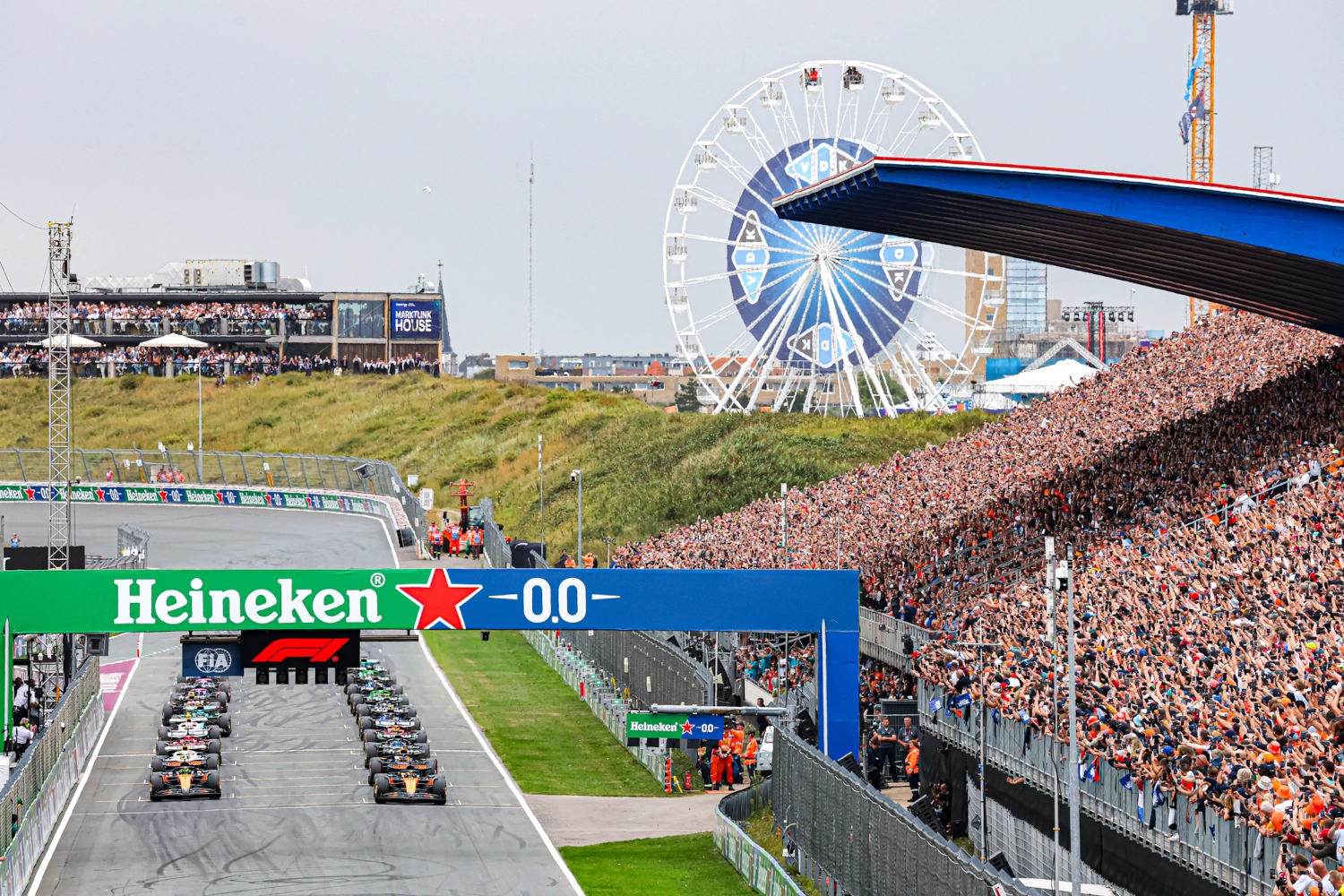
Zandvoort is a useful example because it is well organized and has a relatively controlled footprint, but it still involves a noticeable walk from the station to the circuit. The F1 Spectator’s Dutch Grand Prix guide describes the station-to-track walk as about 15 minutes, and fan reports show that even a mostly seated day can still produce a meaningful step count.
Montreal is one of the easier races to reach by public transport, but official guidance still says the metro stop is around 15 to 20 minutes from the circuit. That makes it a very good example of why “easy to attend” and “minimal walking” are not the same thing.
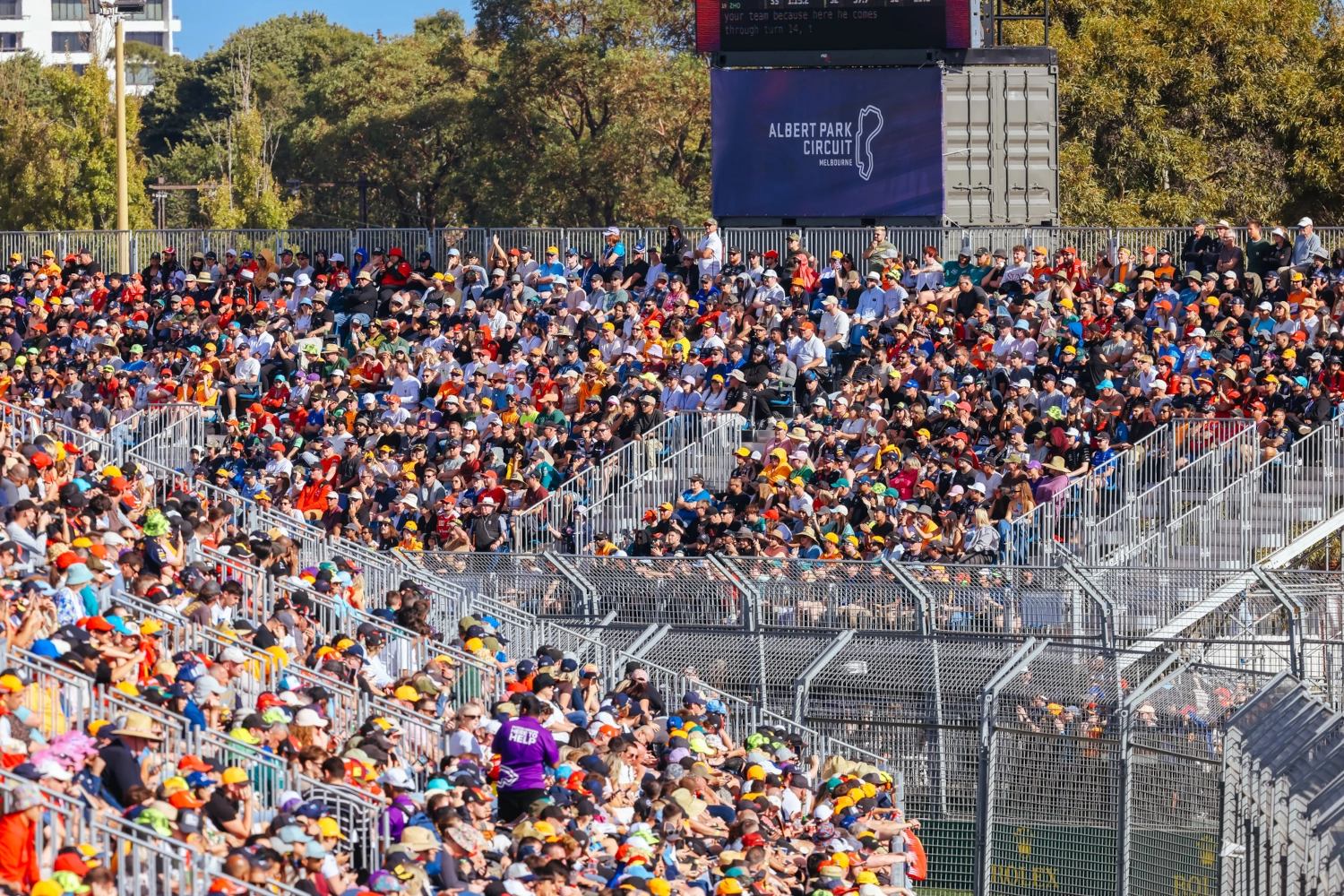
Melbourne offers one of the easiest public-transport setups on the calendar, with heavy tram service and free event-day travel for ticket holders between the CBD and Albert Park. But the official Grand Prix guidance still shows multiple gates, recommended travel paths, and the need to think about how you move around inside and out of the venue. That means the day can still involve a lot of walking even when getting there is straightforward.
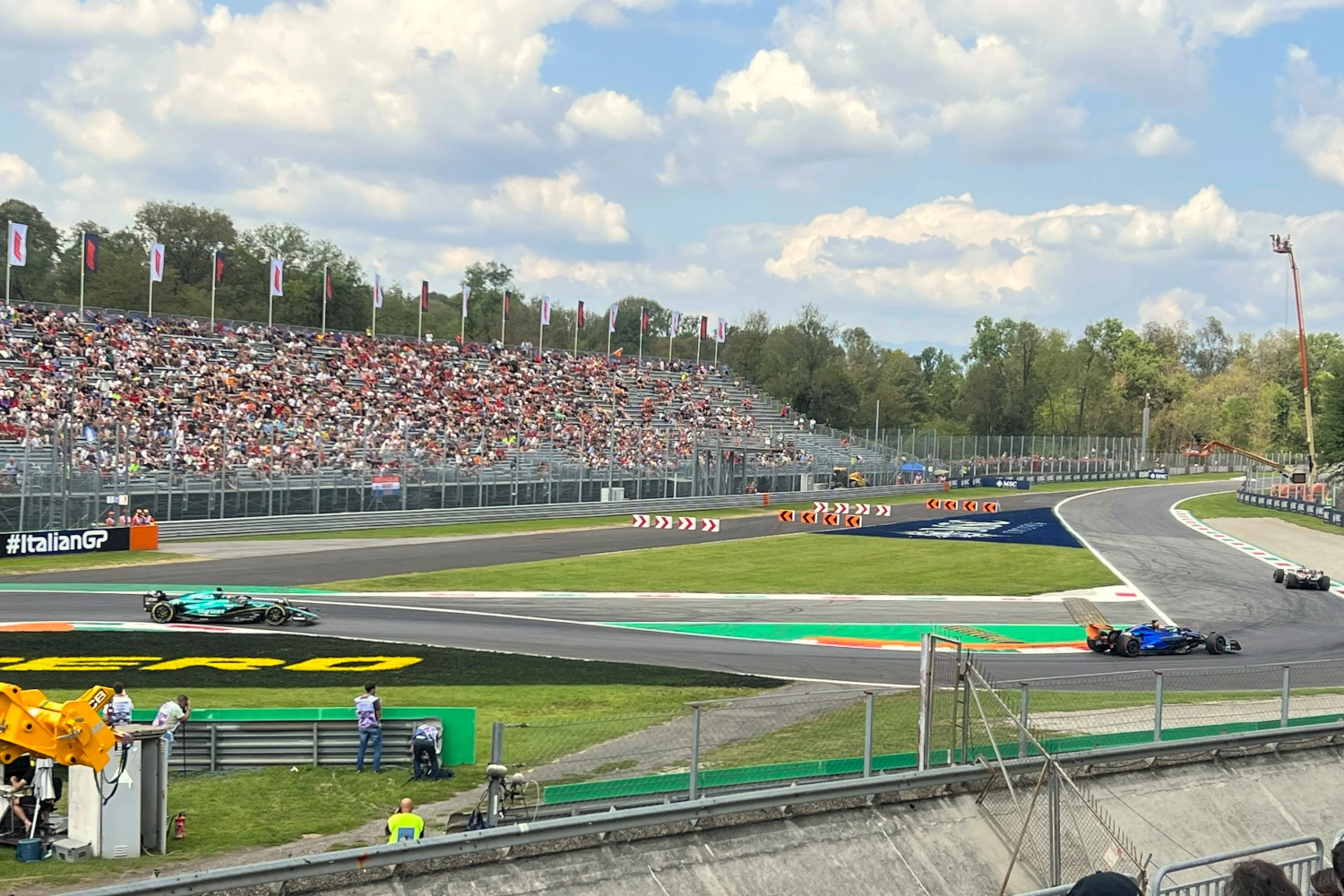
Monza is excellent for showing the upper end of what fans should prepare for. Formula 1’s official fan guide says Monza station is around 6.5 km from the circuit, so most fans continue by shuttle and then on foot. The official guidance on parking also says some lots can leave fans 0.5 to 5 km away. Fan reports of 20,000 to 30,000 steps line up with that layout very well.
Spa is one of the clearest reminders that raw distance is only part of the story. Fan reports mention long uphill and downhill sections and walking times of 30 to 40 minutes each way in some cases. That makes Spa one of the races where the day can feel more demanding than the step count alone suggests.
City races sometimes sound easier because there is less parking and more public transport, but that does not automatically mean less walking. Formula 1’s Singapore fan guide notes that some nearby hotels are still 15 to 25 minutes on foot from the circuit, while Las Vegas guidance also emphasizes walking and allowing plenty of time to reach the correct zone. These races may reduce the “remote circuit” problem, but they do not remove walking from the day.
You should still expect a fairly active day. A reserved seat helps because you are not roaming the circuit in search of a viewing spot, but it does not remove the approach walk, the queueing, or the movement inside the venue. For many fans, a grandstand day still lands firmly in the 10,000 to 20,000 step territory.
You should expect more. General Admission usually means earlier arrival, more time on your feet, more movement around the circuit, and more walking overall. If you are trying to estimate conservatively, it makes sense to assume the upper end of the normal range rather than the lower end.
The practical advice is simple. Wear comfortable shoes, plan your gate and route before you arrive, do not overpack, and assume there will be standing as well as walking. If mobility or fatigue is a concern, it is also worth checking the official accessibility and transport guidance for your specific race ahead of time, because some venues are much more demanding than others. Official guides from multiple races consistently emphasize route planning, gate planning, and sensible footwear.
If you are going to an F1 race, the safest assumption is that you will walk a lot.
For many fans, 10,000 to 20,000 steps is a realistic full-day expectation. A lighter day can fall below that, especially with a reserved seat and efficient arrival, but bigger venues, General Admission, long transit approaches, and hilly terrain can push the total much higher. The important thing is not to think of the day as “mostly sitting in a seat.” At most races, it is better to think of it as a long event day with a lot of movement built in.
Fastway1 helps you compare Formula 1 ticket options across trusted sellers in one place. You can browse each race, compare ticket types, and choose the kind of experience that suits you best — whether that means a reserved grandstand, General Admission, or a more premium option. Once you find an option you like, click through to the seller to confirm the exact section, day(s) included, and delivery method before you buy.
Q: What makes Fastway1.com different from other ticket sellers?
A: Fastway1.com is the only Formula 1 ticket aggregator globally, offering a comprehensive search engine that compiles ticket data from multiple sellers to help fans find available tickets, even when others are sold out.
Q: How does Fastway1.com ensure ticket authenticity?
A: Fastway1.com partners only with established resellers and screen all our partners. However, we do not directly confirm the authenticity of tickets.
Q: Can I purchase tickets directly from Fastway1.com?
A: No, Fastway1.com does not sell tickets directly. Instead, it provides a platform for users to compare prices and availability from partner seller websites, where the actual purchase is completed.
Q: What types of tickets can I find on Fastway1.com?
A: Fastway1.com offers comprehensive listings for various F1 ticket categories, allowing users to filter searches by race and ticket type to find the best options for their needs.
Q: Does Fastway1.com offer any additional services?
A: Not directly, but Fastway1.com has partnered with Booking.com to provide hotel booking options at Booking.com, making it easy for fans to plan their entire Formula 1 experience.
Q: Is Fastway1.com affiliated with Formula 1?
A: Fastway1.com is not affiliated with, endorsed by, or in any commercial partnership with Formula 1 or its associated companies. It operates independently to provide a valuable service to F1 fans.
Q: How can I contact Fastway1.com for support?
A: For any inquiries or support, you can contact Fastway1.com via email at info@fastway1.com. The customer support team aims to respond within 24 hours.
Q: What are the future plans for Fastway1.com?
A: Fastway1.com plans to expand its services beyond ticket sales, including a travel builder tool for planning trips and a future mobile app focused on simplicity and speed. The company also aims to increase partnerships with Formula 1 teams and race organizers.